How Scotland’s workforce system can evolve for a changing world of work
Rapid changes in technology, skills needs and the way people learn, work and progress are putting new demands on the systems designed to support them.
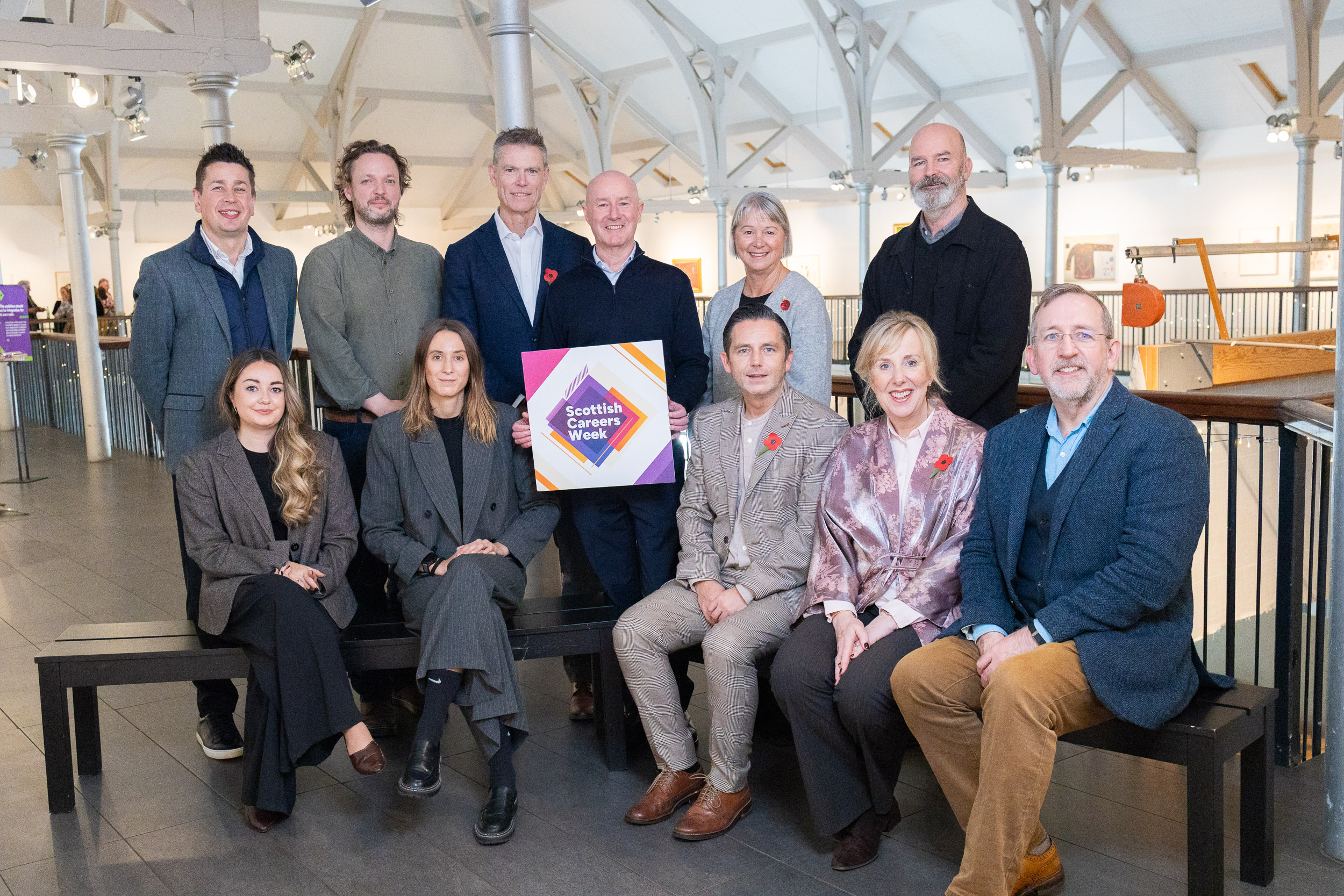
That was among the key messages heard by leaders from education, skills, employment and industries across Scotland who came together in Edinburgh for the Working Futures symposium on 11 November.
Hosted by Skills Development Scotland and Prosper as part of Scottish Careers Week 2026, the international event brought together contributors from Scotland, the UK and beyond to explore how to work together to create a workforce and careers system that is fit for the future.
A strong message throughout the day was that responding to change will require a more joined-up approach across education, skills, employers and wider partners.
Lifelong learning is crucial as people experience longer and more varied careers, while closer engagement between education and business will be essential to ensure people develop the skills employers need.
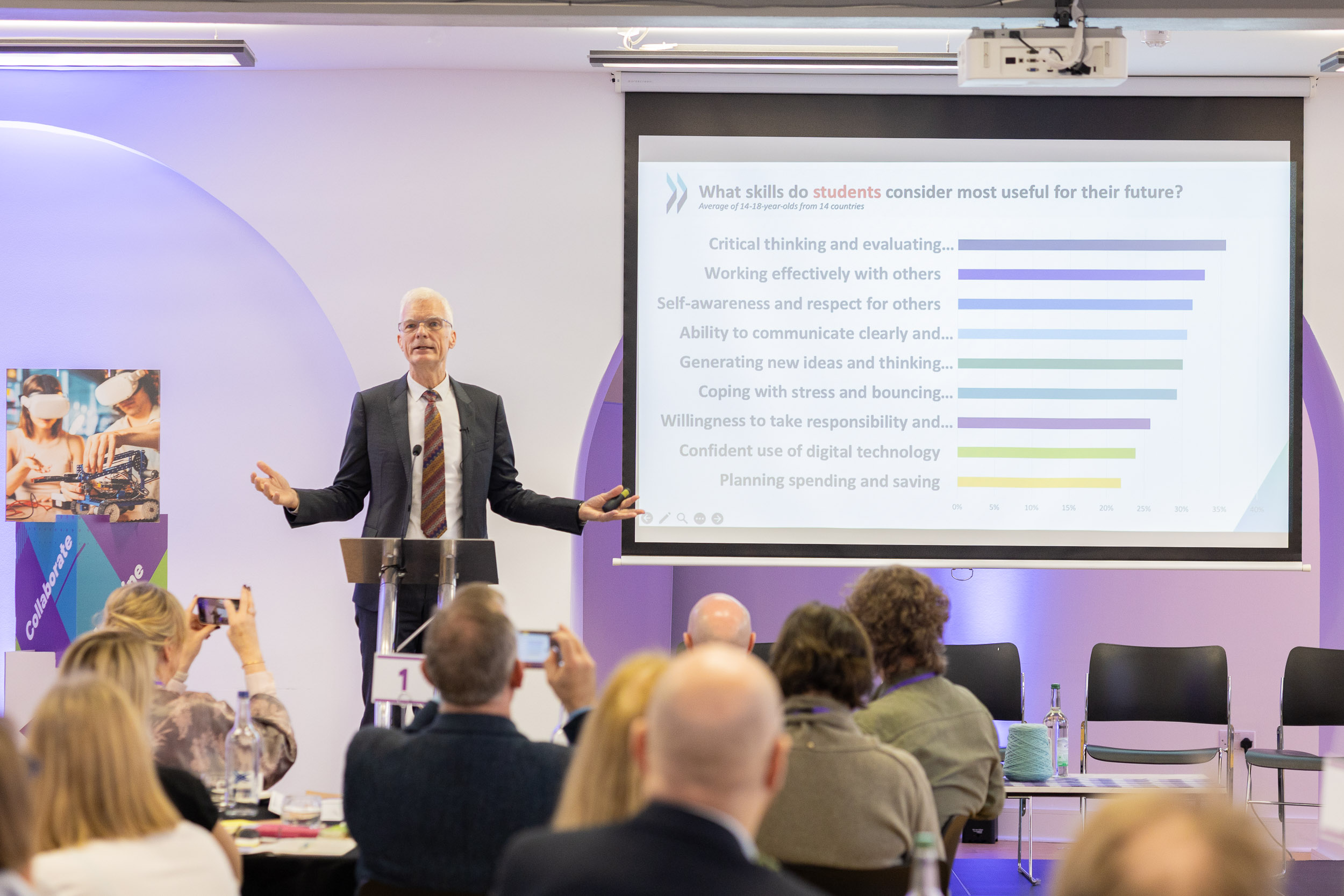
Attendees heard how artificial intelligence is changing the skills people need at work, while longer and more varied careers mean opportunities to learn, upskill and move between jobs will be increasingly important throughout people’s working lives.
Director for Education and Skills at the OECD, Andreas Schleicher, explored how education and training systems need to respond to global economic, technological and social change. He said: “In most countries now, knowledge and skills are the most prominent driver of innovation, of economic growth, of social development.”
On the growing importance of lifelong learning, he added: “In the past we used to learn to do our work. Now learning is the work. The faster the world changes, the less we can get everything right once. We need to upskill and reskill. We need to have that motivation to invest in ourselves, into an uncertain future. That is what gives you the resilience to shape the future.”
President and CEO of Rodel Foundation, Paul Herdman, considered how Scotland can build on its existing strengths to better prepare young people for the transition from education into work.
Paul added: “Scotland already has a great foundation. The university sector here is among the best in the world already. And you have foundation apprenticeships, you have graduate apprenticeships and modern apprenticeships. You have a lot to build upon, it’s a matter of just connecting the dots.”
Artificial intelligence and its implications for workers, employers and the economy were a focus of the symposium.
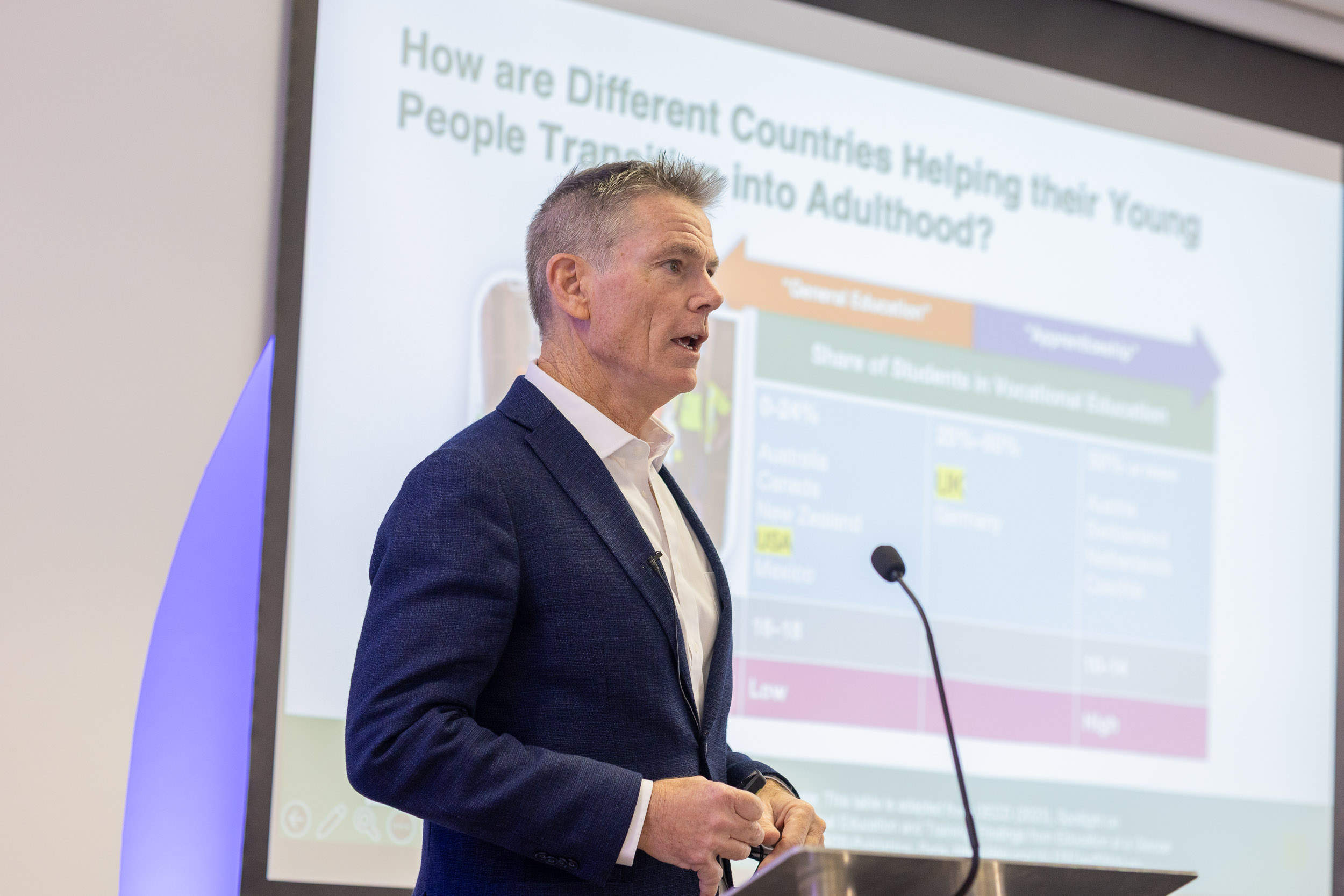
President of the Burning Glass Institute, Matt Sigelman, shared evidence on how AI is changing the skills required within jobs and the importance of preparing people for changing roles and career transitions.
Matt also highlighted lifelong learning as a priority for Scotland as people need to continually develop their skills throughout longer working lives.
He said: “For Scotland to prepare for AI, I would invest in lifelong learning. We need to make sure that workers can see the changes that are coming and they have a place where they can go and acquire those skills.”
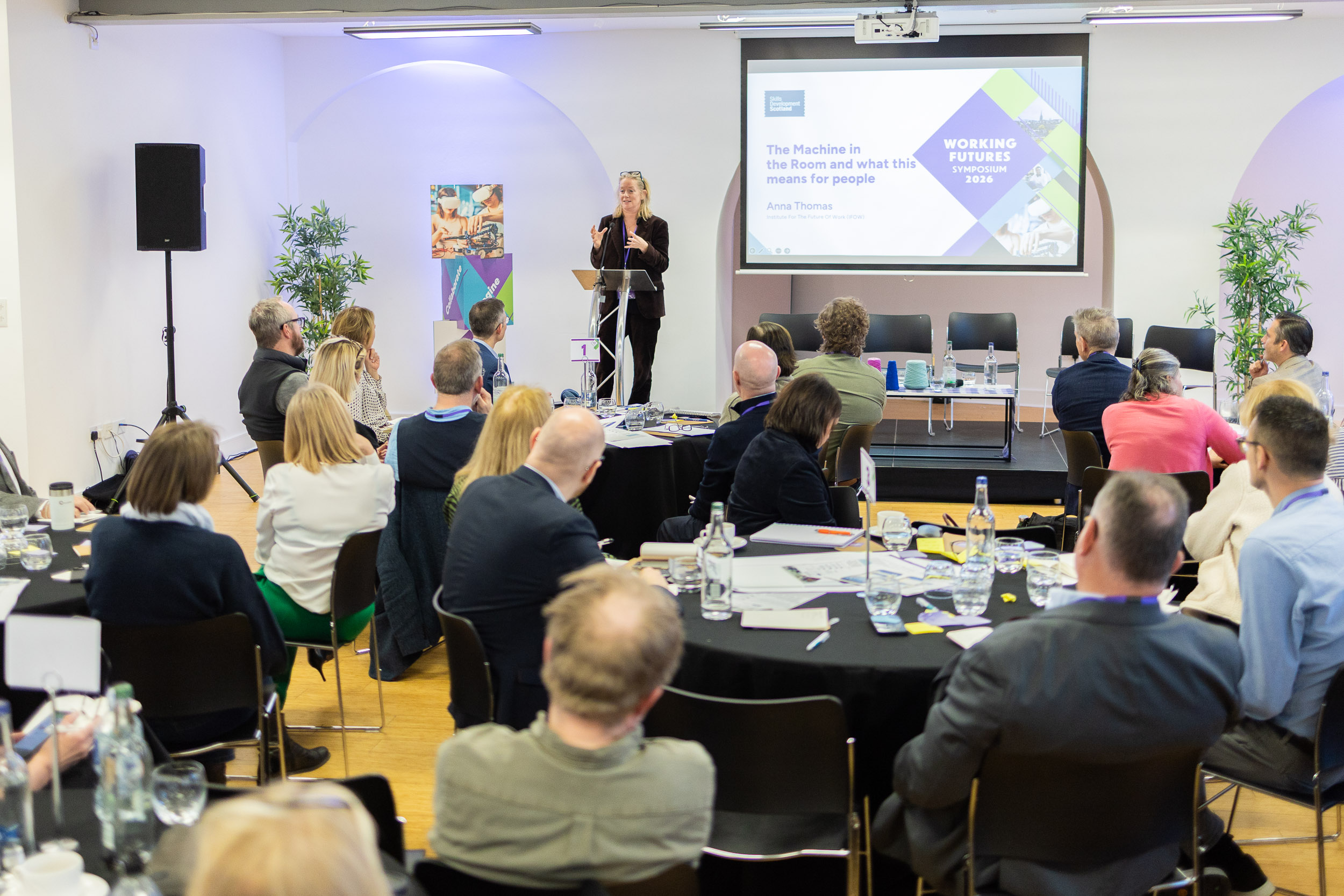
Anna Thomas, from the Institute for the Future of Work, focused on the human impact of AI on people and working lives, including what it means for fairness, job quality, confidence and opportunity.
She said: "If we continue to focus on job quality, on people, on experience, and the development of human skills and capabilities, that means better outcomes for individuals, for public services, for firms, and for local economies.”
Panel discussions brought together representatives from across the public, private and third sectors to explore the role of employers in workforce development and how Scotland can turn shared ambition and recommendations into sustained action.
ScottishPower CEO Keith Anderson highlighted the role employers can play in creating pathways into training and employment for young people, and the importance of collaboration across business, education and government.
He said: “For companies, we can create lots of pathways into employment, but we're never going to solve and tackle the issue on our own. We need to collaborate, and that's collaboration between businesses working together. It's collaborations with the schools, with colleges, with universities, and it's collaborating with the government. If we all work together, we can tackle this issue, we can solve the problem and we can get every youngster in Scotland into a training opportunity and into employment.”
An interactive session led by Ariea Burke Theiler and Lena Dändliker from CEMETS Global Foundation in Switzerland brought together the day’s discussions, with attendees considering what needs to happen next for people, places and systems to thrive by 2032.
Chief Executive of Skills Development Scotland, Damien Yeates, said: “In the midst of Scottish Careers Week 2026, we had a real ambition to convene and connect the brightest and best minds to help us think into the future and understand what is it going to take to create the workforce that Scotland needs."
The insights shared and discussions on the day will inform wider discussion about how Scotland must respond to the changes reshaping our future workforce.
SDS will continue to work with partners to identify how the ideas raised can be taken forward through collective action.