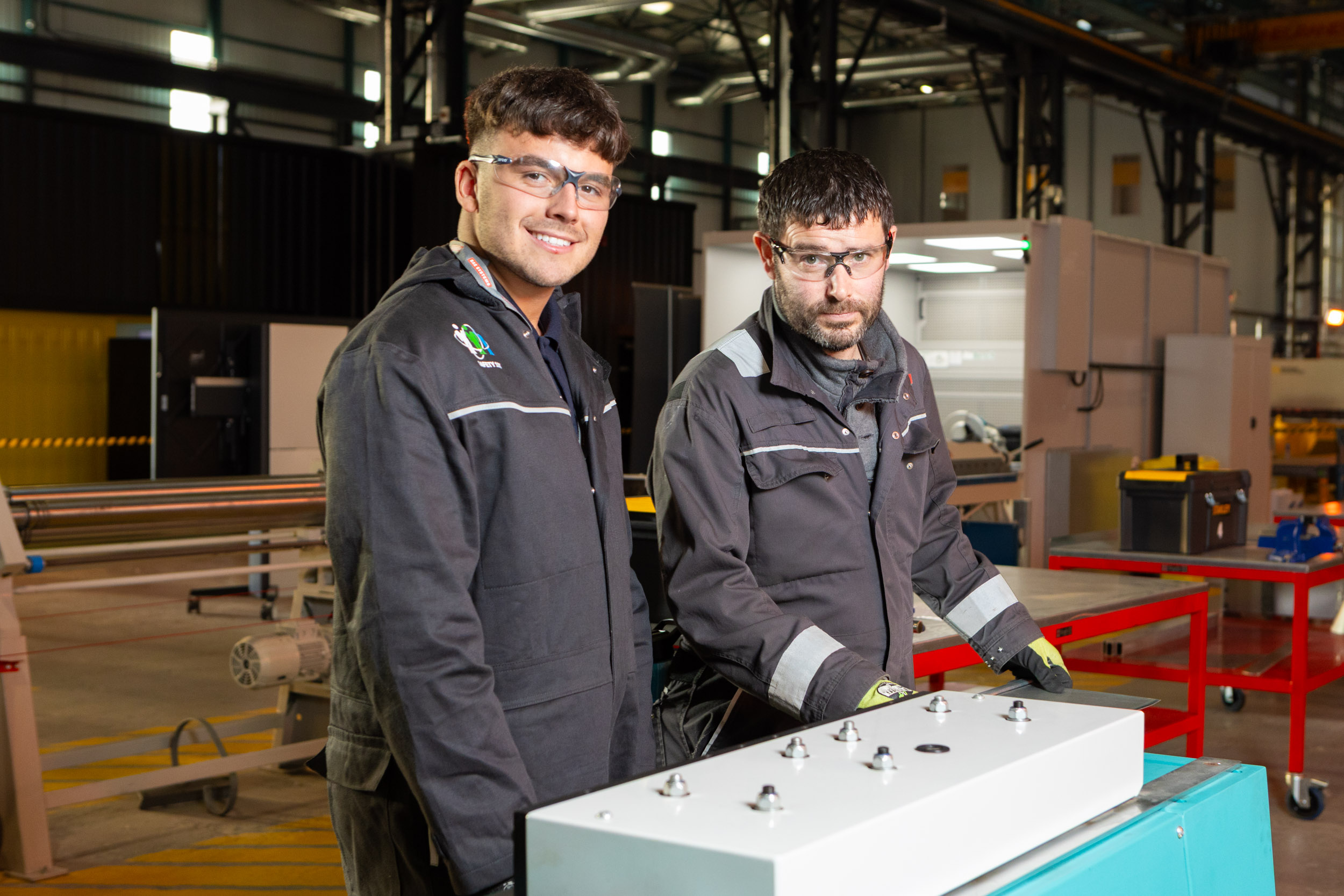
Glasgow shipbuilding giant engineers excellence through apprenticeships
A Glasgow shipbuilding powerhouse has crafted apprentice careers for more than 50 years – creating a pipeline of new talent that’s tackling a UK skills shortage and supporting economic growth.
BAE Systems’ sector-leading apprenticeships drive innovation and productivity and give the Clydeside giant the capability to secure major global contracts.
As the UK Ministry of Defence’s largest supplier, BAE apprentices are critical in landing landmark bids, like the recent deal to supply Norway with Type 26 frigates, set to boost the UK economy by £10 billion.
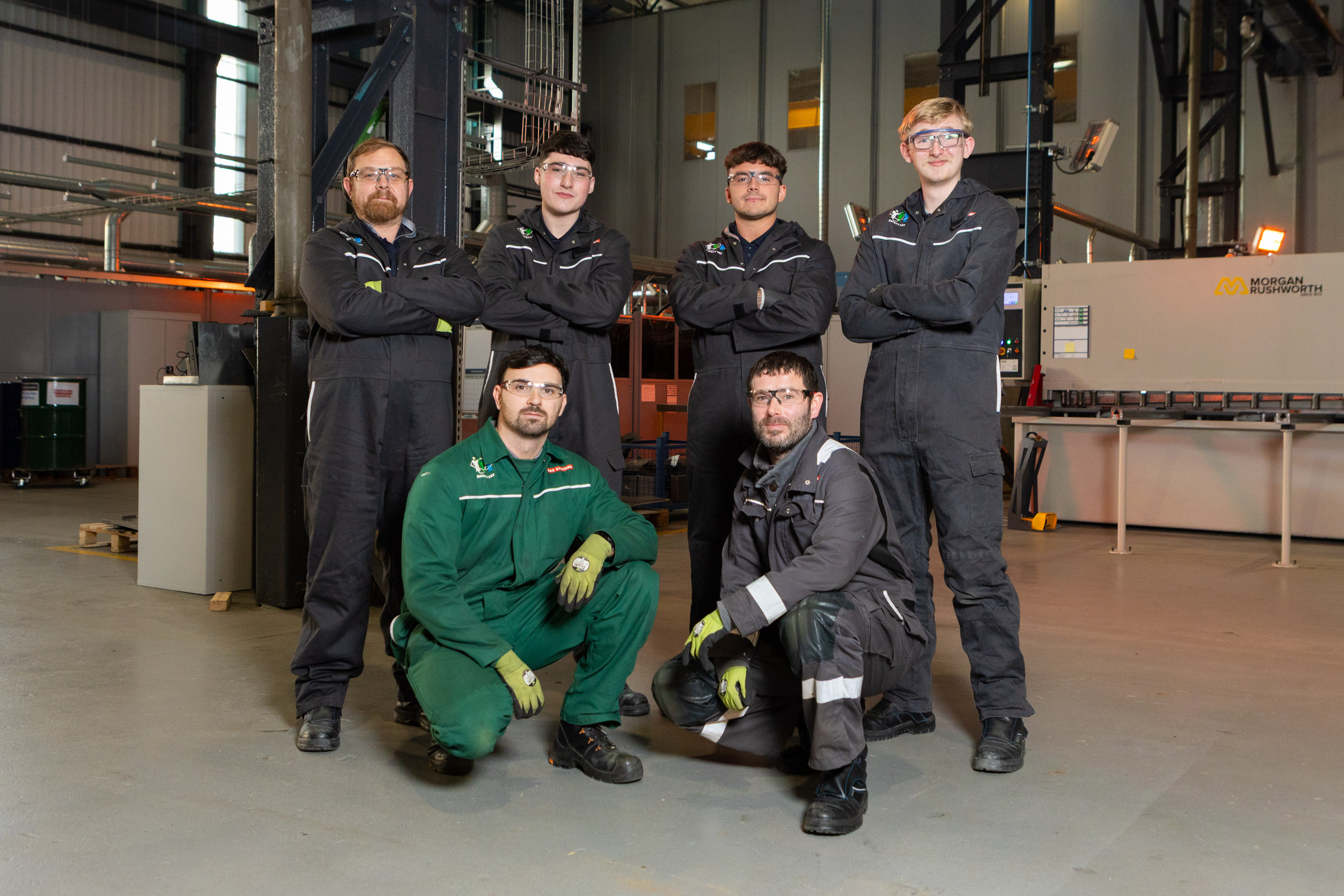
Apprentices are also key in attracting future employees, with more than 80 BAE ambassadors promoting careers in Science, Technology, Engineering or Mathematics (STEM) to over 20,000 school pupils in 2025.
Head of Early Careers at BAE Systems Phil Brown said: “There’s a skills shortage within the defence industry and apprenticeships allow us to grow our own talent to meet demand. Our programme gives them the best possible chance to succeed while supercharging the skills of our workforce.”
Early Careers Manager Angela Hamilton added: “Apprentices develop and grow into confident professionals who contribute real value to the business.”
BAE has just under 5,000 employees in Scotland, with around 600 apprentices employed across Foundation, Modern and Graduate levels, including steelwork, engineering, cyber security, finance and project management.
With plans to recruit another 700 apprentices in the UK over the next five years, BAE has invested heavily in a high-quality learning experience with state-of-the-art facilities, hands-on experience and personalised learning plans.
Craft Engineering entry requirements are the lowest in Scotland to widen access to people with lower qualifications and additional support needs, and training begins before employment, with welcome events that involve apprentices’ families and identify individual learning needs.
A structured two-week induction includes financial guidance, health and safety, and wellbeing and apprentices meet with their coach to develop an Individual Learning Plan, created in collaboration with partner colleges.
The Early Careers team supports each apprentice and provides regular progress reviews. Apprentices can also move between qualification levels based on performance.
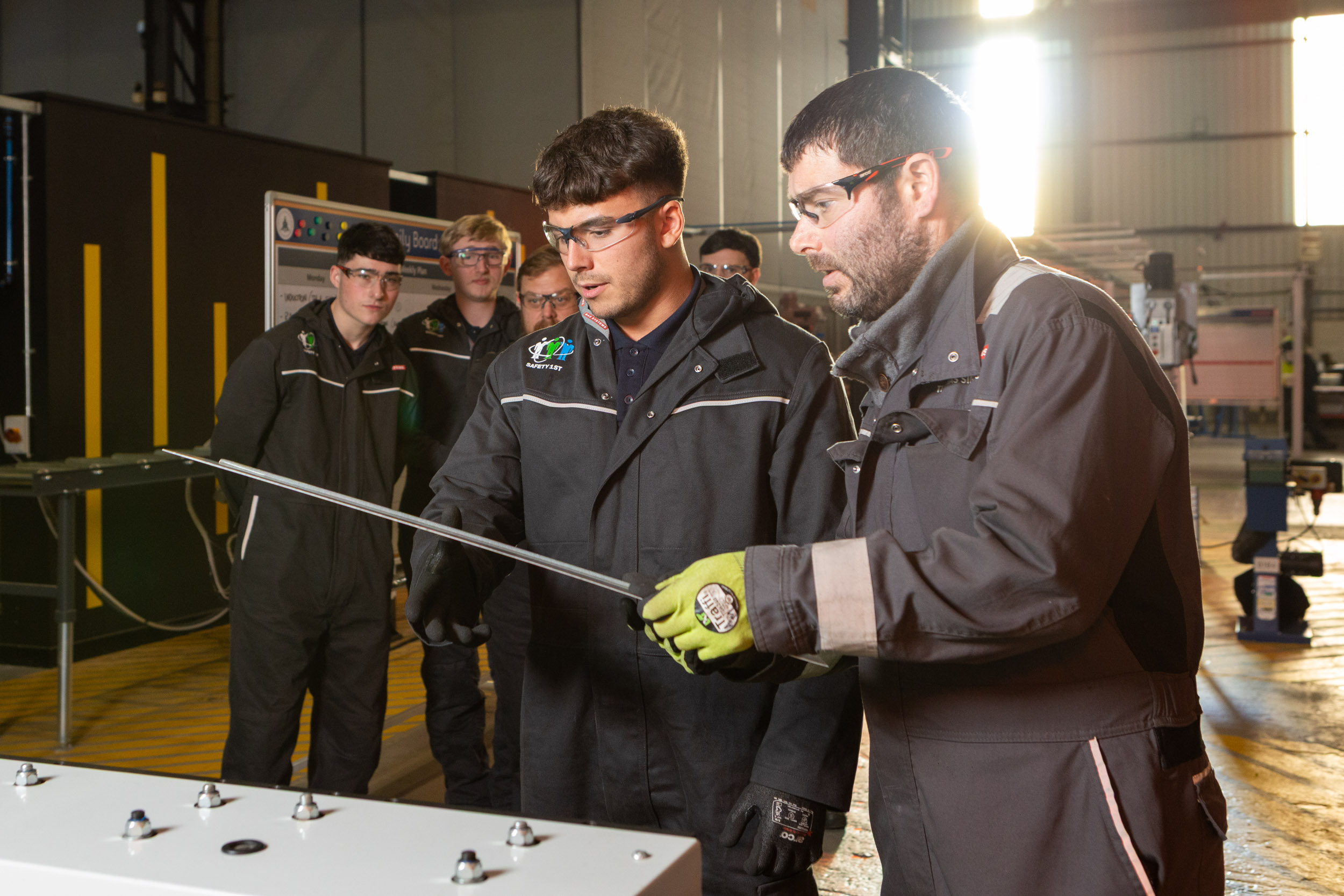
The training environment includes BAE’s £12million purpose-built Applied Shipbuilding Academy with more than 40 specialist learning spaces, including trade areas, STEM facilities, ship mock-ups and an augmented reality welding classroom.
Digital projects with virtual environments are designed to simplify learning. A co-delivery hybrid model has more than 80 vocational discipline-specific shipbuilding modules, assessed by BAE staff and quality assured by college partners to meet awarding body standards.
Case study-based learning teaches shipbuilding concepts in an engaging and interactive way, involving real-life scenarios to bring safety and workplace culture to life. Another session, targeted at steelwork apprentices, takes a board game format.
Recognising that apprentices need more than technical training, a new functional rehabilitation pilot aims to boost physical and mental wellbeing.
The personalised 12-week programme offers preventative health advice, return-to-work support and longer-term rehabilitation where required, helping apprentices stay healthy, engaged and confident throughout their careers.
Apprentice and Skills Leader, Julie Marshall explained: “We have three different programmes. The first, Feel Better, is more preventative, offering information on areas like BMI and cholesterol to create a plan for making themselves healthier and happier.
“Resilience for Work is for those who need more support, who are maybe on a phased return, while Functional Rehab is designed for longer-term physical or mental health issues with bespoke sessions.”
Apprenticeships are working for Scotland by creating careers and enabling people to reach their potential, supporting employers to develop and grow their workforce and getting real returns for the economy.
There are currently around 12,000 apprentice employers in Scotland, investing in over 40,000 Foundation, Modern and Graduate Apprentices.
Angela added: “There’s more awareness of the benefits of apprenticeships – being able to learn while you earn and developing the softer skills and life experience.
“Apprenticeships bring fresh insights to businesses from people who are eager to progress, which makes them vital for Scotland’s workforce and economy.”
BAE Systems was recognised as a finalist in the Leading in Learning Provision category at the Scottish Apprenticeship Awards 2026 in association with SP Energy Networks.